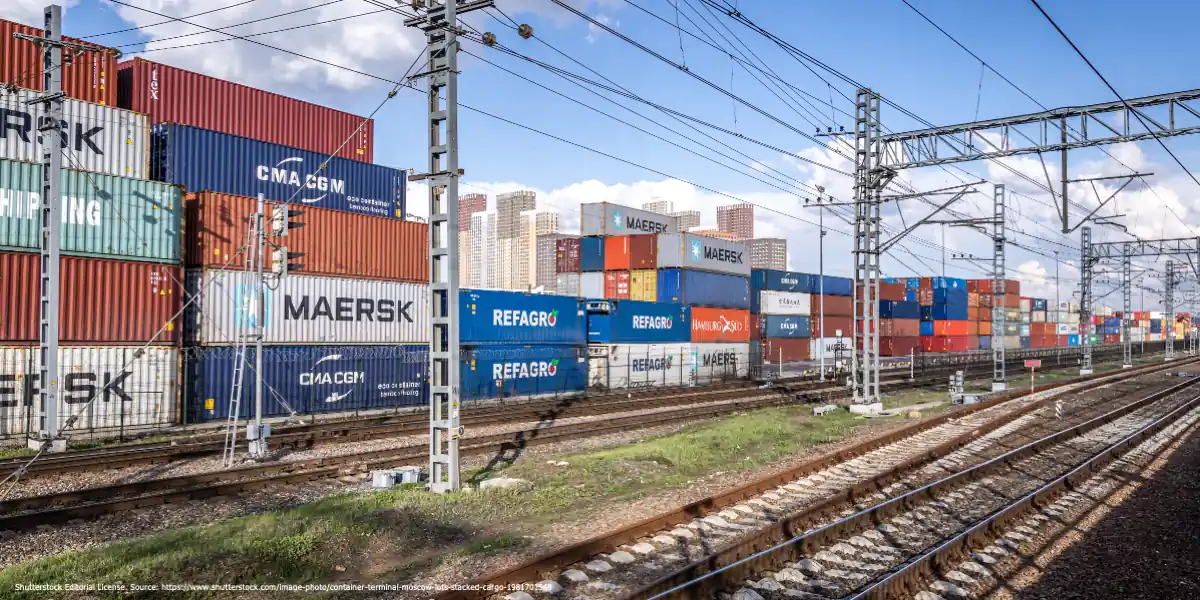
The study examines how trade sanctions imposed on Russia after its full-scale invasion of Ukraine have been circumvented through neighbouring economies. Using product-level monthly trade data for 2017–23 and a triple-difference approach comparing sanctioned and non-sanctioned products across destinations and over time, the authors identify two channels. The first is conventional rerouting: European goods are exported to Armenia, Kazakhstan, and the Kyrgyz Republic and subsequently shipped to Russia. The second is a less documented “lost-in-transit” mechanism, in which goods declared as exports to these countries transit Russia but never reach their stated destination, creating discrepancies between European export and Central Asian import statistics.
Direct EU and UK exports to Russia fell by more than $66 billion in March–December 2022–23 relative to the corresponding pre-war average, with particularly large declines for sanctioned dual-use, industrial and luxury goods. At the same time, exports of sanctioned products to Armenia, Kazakhstan and the Kyrgyz Republic increased disproportionately. The authors estimate that rerouting and goods lost in transit together offset roughly one third of the reduction in European exports to Russia attributable to product-specific sanctions, with the two channels contributing approximately equally. Rerouting was particularly important for industrial goods. Including trade intermediated through Türkiye suggests that third-country trade may have offset an even larger share of the sanctions’ effect. Restrictions introduced by the EU in 2023 on transit through Russia, especially for dual-use goods, reduced the lost-in-transit channel, indicating that tighter transit controls can curb this form of circumvention. Despite substantial evasion, sanctions produced only modest increases in the unit values of sanctioned goods reaching Russia, suggesting that access to alternative suppliers and trade routes limited the additional costs imposed on Russian importers.