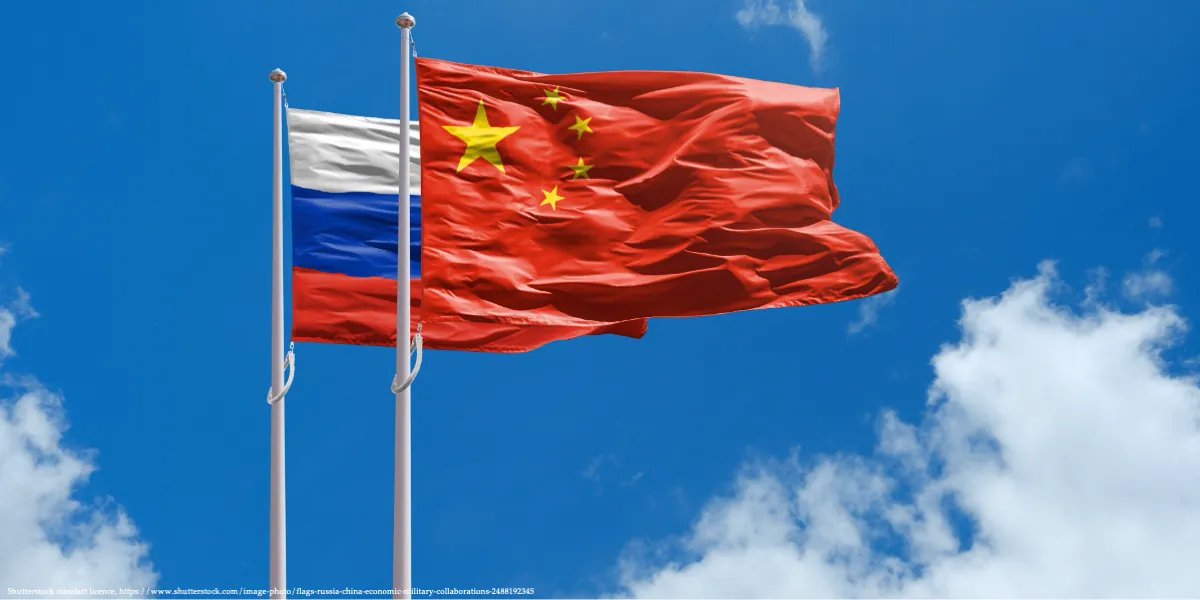
In an in-depth RFE/RL analysis of the recent Beijing summit between Vladimir Putin and Xi Jinping, energy relations and the stalled Power of Siberia-2 gas pipeline project took center stage. While the leaders signed a series of agreements to deepen strategic cooperation, no breakthrough emerged on long-term gas commitments. Amid this backdrop, Henrik Wachtmeister offered his assessment of the evolving China-Russia energy relationship.
Henrik Wachtmeister, an Associate Professor at Uppsala University and a Research Fellow at the Swedish National China Centre at the Swedish Institute of International Affairs (UI), highlighted the strategic imbalance between Moscow’s urgency for energy revenue and Beijing’s cautious approach.
“Russia needs the revenue from trade much more than China needs Russian energy,” Wachtmeister told RFE/RL, underscoring that Russia faces pressure from sanctions and shrinking markets, whereas China enjoys a wider array of energy suppliers.
His insight sheds light on why concrete progress on Power of Siberia-2 failed to materialize at the summit, despite the project’s significance for rerouting Russian gas exports after the loss of European markets.
Wachtmeister also pointed to the broader implications of this asymmetry for the partnership. Even though Putin and Xi publicly pledged to deepen cooperation and signed a joint statement on expanding energy collaboration, China’s hesitance reflects its strategic diversification. With a larger economy and multiple import options, Beijing can negotiate from a position of strength, reducing the urgency to commit to new Russian gas infrastructure. This cautious stance helps explain why Russia, despite emphasizing its role as a reliable energy supplier, could not secure firm timelines or terms for the pipeline project during the talks.
Wachtmeister’s commentary underscores a key takeaway from the summit: while China and Russia continue to present a united front on geopolitical issues, fundamental economic dynamics shape their cooperation in energy markets. Russia’s need for guaranteed revenues contrasts with China’s strategic patience and market flexibility.
For the full report and Henrik Wachtmeister’s expert analysis, visit RFE/RL’s coverage of the China-Russia summit.
Further Reading: Russia’s Wartime Economy and Sanctions Impact
For deeper insight into Russia’s economic outlook and the long-term impact of sanctions on Russia, explore SITE’s report, Financing the Russian War Economy. This in-depth analysis examines Russia’s budget deficit, wartime spending, energy revenues, and fiscal sustainability under Western sanctions.
For additional research on sanctions policy, energy flows, and economic pressure mechanisms, see the latest publications in the SITE Sanctions Hub Evidence Base.
Do Economic Sanctions Work? Evidence and Policy Lessons
The effectiveness of economic sanctions has long been debated among policymakers, economists, and security experts. Some critics argue that sanctions are blunt instruments with uncertain outcomes, while others point to cases where sustained economic pressure influenced political behavior and policy change.
Drawing on decades of empirical evidence, the FREE Network policy brief explores the effectiveness of economic sanctions, their unintended consequences, and the lessons for future sanctions design. Read the full policy brief, “The Effects of Sanctions,” by Maria Perrotta Berlin, Assistant Professor at the Stockholm Institute of Transition Economics.