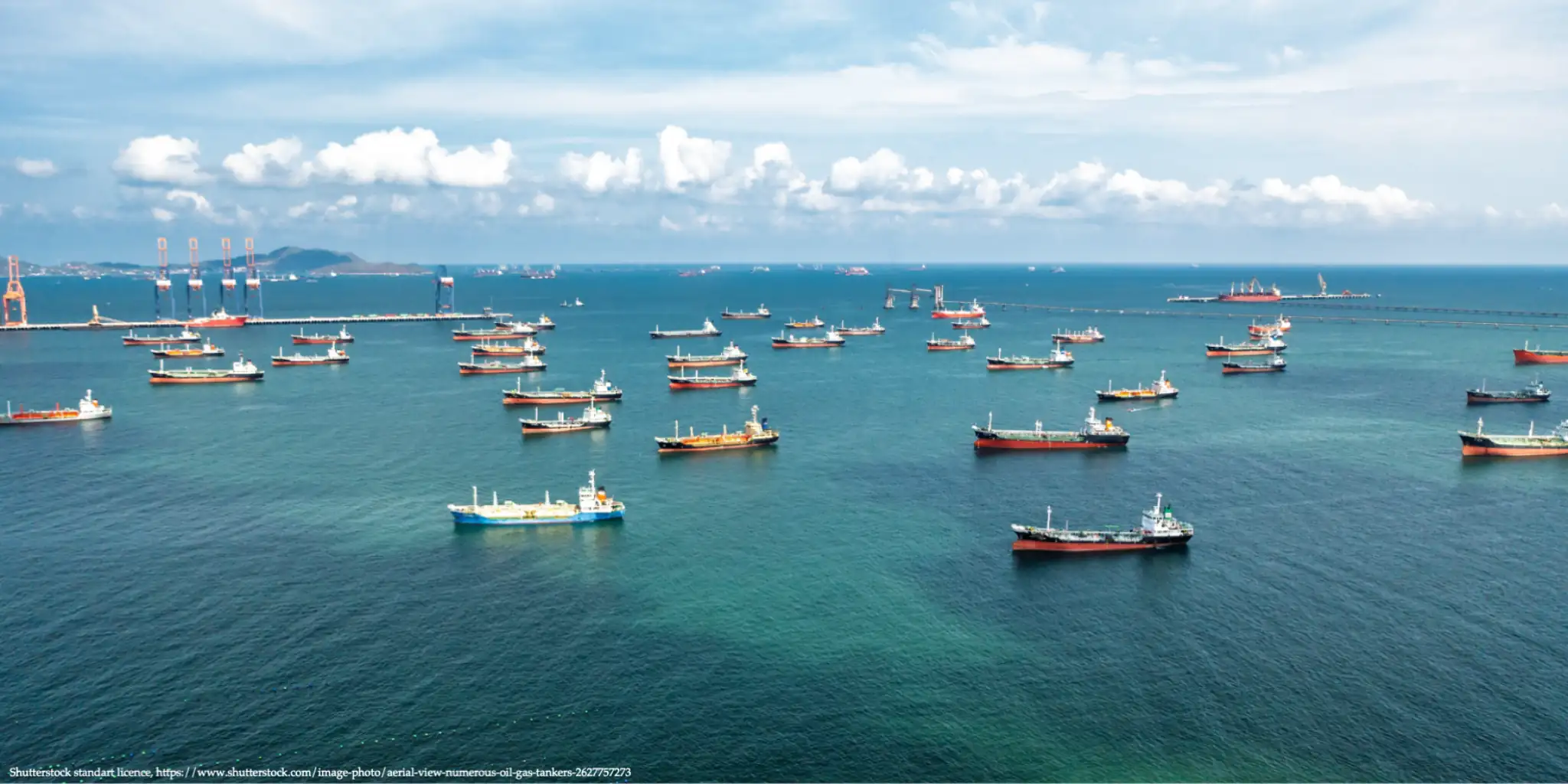
A new Washington Post visual investigation examines Iranian tanker activity during the U.S. naval blockade near the Strait of Hormuz. The article features expert analysis from Petras Katinas on how Iran may keep oil moving, even under severe maritime pressure. Using satellite imagery and ship-tracking data, the report shows how tankers continued loading crude and fuel products at key Iranian ports.
The article highlights the strategic role of Kharg Island, a major hub for Iranian crude exports. According to The Washington Post, three Iranian tankers loaded a combined 5 million barrels of crude there. Petras Katinas, Research Fellow in Climate, Energy and Defence at the Royal United Services Institute, explained that tankers can also serve as floating storage. He noted that this helps Iran keep oil moving through its system and avoid costly shutdowns.
The wider investigation also discusses U.S. enforcement measures and the risks facing vessels linked to Iranian ports. U.S. officials said destroyers were tracking ships inside and beyond the blockade area. The report also notes that 19 ships had turned back by Friday morning rather than challenge the blockade. These developments show how maritime restrictions can reshape oil logistics, energy security, and regional policy calculations.
The article places the Strait of Hormuz at the center of global energy concerns. Iran announced that it was reopening the waterway, while President Donald Trump said the blockade would remain in place until a broader deal with Tehran was complete. For policymakers, the episode shows how sanctions, blockades, and shipping controls can affect both state revenue and global energy markets.
To explore the full analysis and Petras Katinas’ commentary, read the complete article in The Washington Post.
Further Reading: Sanctions Portal
For further expert analysis on sanctions, energy flows, and economic pressure, visit the portal’s recent publications in the Evidence Base. Learn more about sanctions against Russia and Russian economic retaliation by visiting the Sanctions Timeline, which tracks measures by date, country, and sector. See the latest media commentary from Petras Katinas and other experts in Media Highlights.
Policy Paper: the Hormuz Blockade
The most recent policy paper published on the FREE NETWORK presents calculations and modeling of how oil producers and consumers in selected countries may be affected by the de facto blockade of the Strait of Hormuz. The authors study two scenarios:
- one where strategic inventories cushion the effects
- and one where inventories have run out.
Russia profits substantially, equivalent to 6-11% of GDP, driven by higher global oil prices and a potential reduction in the sanctions-induced discount on Russian oil. Net oil importers lose, most substantially India, to some extent China, and to a lesser extent Europe. Within Europe, most countries lose, with the exception of Norway and possibly Estonia. Gulf countries generally lose since they cannot export their oil. Surprisingly, Saudi Arabia can make a net profit by earning high prices for oil redirected to its western ports.