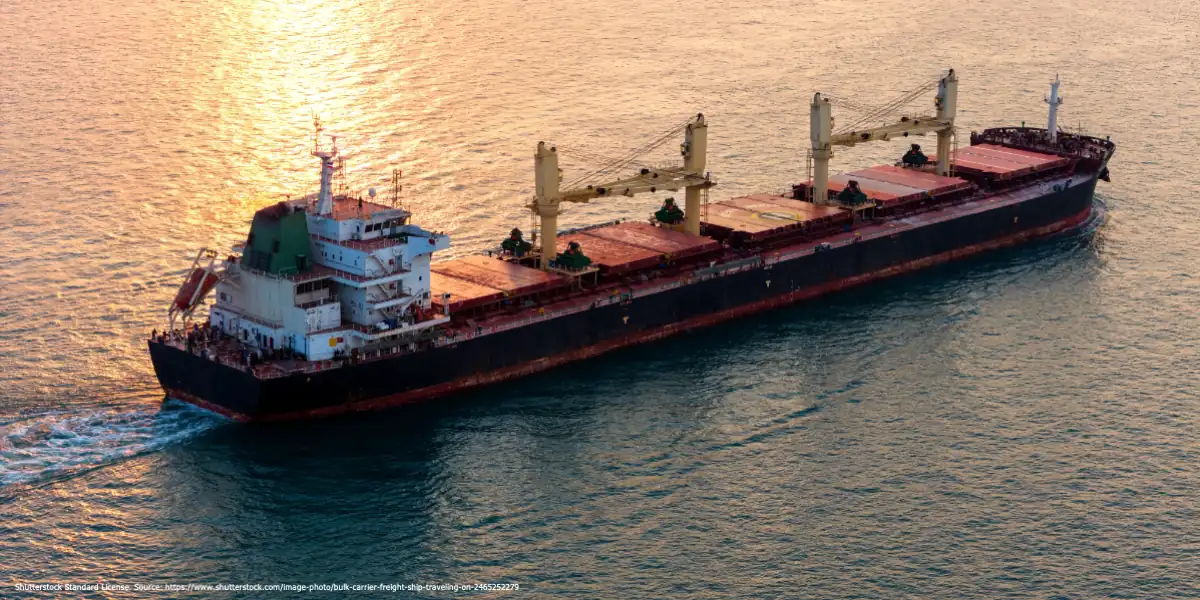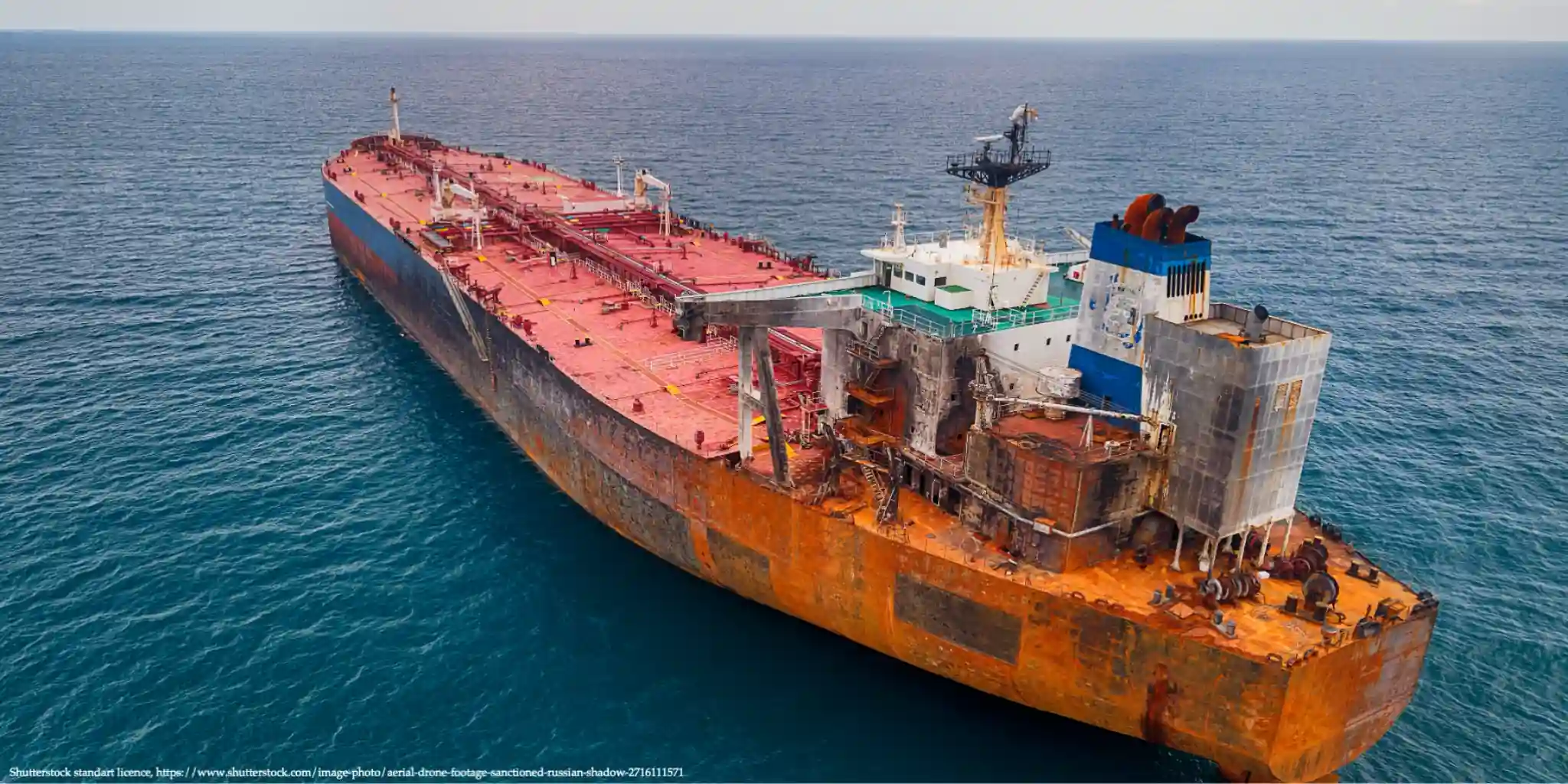
Russia’s shadow fleet continues to transport vast quantities of crude oil through European waters despite international sanctions. In a recent investigation, The Sunday Times reported that sanctioned tankers linked to Russia carried an estimated €3.7 billion worth of crude oil through Ireland’s maritime territory in 2025. Irish Naval Service intelligence recorded 92 sanctioned vessels entering Ireland’s exclusive economic zone during the year, completing 207 passages while carrying roughly 10.2 million tonnes of cargo oil.
Petras Katinas, an analyst at the Centre for Research on Energy and Clean Air (CREA) and Research Fellow at the Royal United Services Institute (RUSI), highlighted the environmental dangers posed by Russia’s shadow fleet. According to Petras Katinas, many of these vessels operate with limited transparency, often lacking proper insurance and disabling tracking systems.
“The biggest question we need to ask is, who will pay for clean-up if there is an oil spill?” Petras Katinas noted.
He warned that if a spill occurs near EU shores without clear insurance coverage, the cost of cleanup could fall on European governments and taxpayers, potentially reaching hundreds of millions of euros.
The investigation also explored how Russia has maintained oil exports despite Western sanctions. Since the invasion of Ukraine, Russian tankers have shipped roughly four billion barrels of oil through European shipping lanes. Much of this oil now flows to India and China, with exports rising sharply in recent years. Meanwhile, European naval and intelligence services have intensified monitoring efforts, citing concerns about maritime safety, environmental damage, and possible security threats linked to shadow fleet activity.
To explore the full investigation and Petras Katinas’ commentary, read the complete article.
Further Reading
KSE Institute has released a special review, “Emerging and Unsanctioned Shadow Fleet,” examining the new vessels Russia added to its shadow fleet to transport crude oil and petroleum products. The study also analyzes Russian shadow tankers that operated between January 2024 and July 2025 and remain unsanctioned.