News

  • Benjamin Hilgenstock: Sanctions and Prices Pressure Russia’s Oil Industry

    Benjamin Hilgenstock: Sanctions and Prices Pressure Russia’s Oil Industry

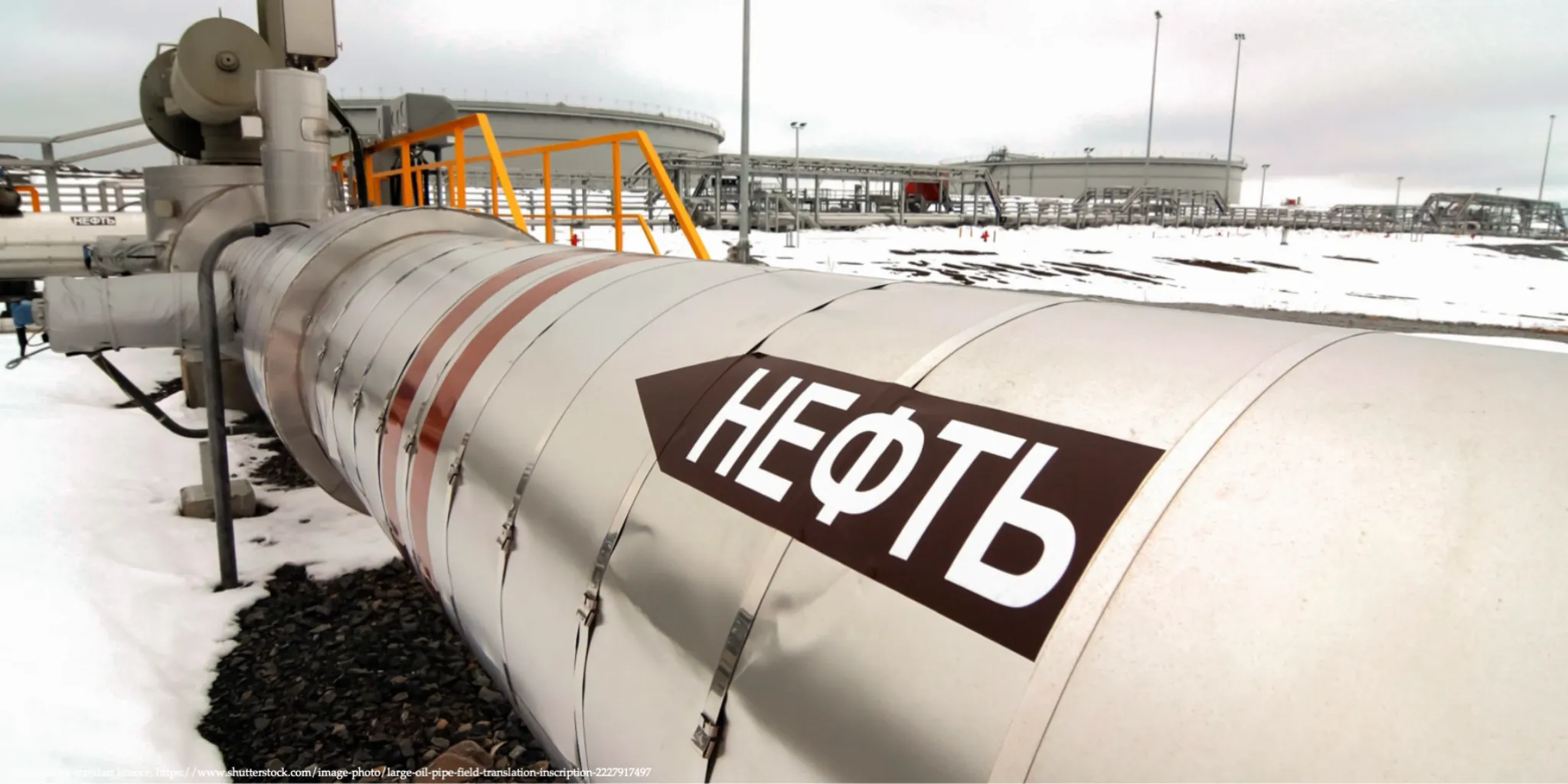
    Russia’s oil industry faces growing pressure from Western sanctions, ship seizures, and falling crude prices. In a recent Livemint article, analysts examine how these forces are affecting Moscow’s key revenue source. The report highlights new logistical challenges and weaker demand for Russian crude in global markets. The developments come as governments tighten enforcement against sanctions evasion.

    Benjamin Hilgenstock, expert at the KSE Institute, provided insight into these developments. Hilgenstock noted that stronger enforcement measures are increasing pressure on Russian oil exports. In particular, actions targeting shipping networks are raising costs and risks. Measures against the so-called shadow tanker fleet make it harder for Russia to move oil to buyers.

    The Livemint article also reports that Russian crude sells at steep discounts. Buyers often demand lower prices to offset sanctions risks. Some tankers carrying Russian oil reportedly remain at sea without buyers. This reflects growing uncertainty in the market. These pressures come as Western governments consider additional restrictions on Russian energy exports.

    Benjamin Hilgenstock’s commentary shows how enforcement and market forces can reinforce each other. Russia previously adapted by building alternative shipping networks. It also secured new buyers in Asia and other regions. However, tighter controls and lower prices now squeeze profits across the sector.

    To read the full article and Benjamin Hilgenstock’s expert analysis, visit the original feature in Livemint.

    Further Reading: Sanctions, Energy, and Russia’s War Economy

    Energy exports remain the backbone of Russia’s economy and a key instrument of geopolitical leverage. Sanctions targeting this sector aim to reduce state revenues and limit Moscow’s influence abroad.

    Visit the Sanctions Portal Evidence Base to access the latest research on energy-related sanctions against Russia.

    Review the Timeline of Western Sanctions and Russian Countermeasures to track how both sides have adapted since the start of Russia’s full-scale invasion of Ukraine.
  • Torbjörn Becker: Russia’s Economy Faces Mounting Pressure

    Torbjörn Becker: Russia’s Economy Faces Mounting Pressure

    Russia’s economic outlook is becoming increasingly uncertain as the war in Ukraine continues and energy revenues decline. In a recent episode of Sveriges Radio’s program Radiokorrespondenterna Ryssland, experts examined the growing strain on the Russian economy and the political implications for the Kremlin. The discussion highlighted how shrinking oil income and fiscal pressures are complicating Moscow’s ability to sustain its war effort.  

    Among the featured experts was Torbjörn Becker, Director of the Stockholm Institute of Transition Economics (SITE). Becker noted that Russia’s public finances are increasingly under pressure as energy revenues fall sharply. According to recent figures, oil income has dropped significantly over the past year while the federal budget has moved into deficit. Becker warned that if these trends continue, the government may be forced to raise taxes, reduce social spending, or scale back military expenditures to stabilize the economy.

    The Sveriges Radio discussion also explored broader geopolitical dynamics affecting Russia’s economy. Analysts pointed to tightening Western sanctions, Ukrainian strikes targeting Russian oil infrastructure, and shifts in global energy trade. In addition, major buyers such as India are reassessing their purchasing strategies, which could further impact Russia’s export revenues and long-term economic stability. 

    For deeper insight into Torbjörn Becker’s analysis of Russia’s economic pressures and their potential impact on the war in Ukraine, listen to the full episode on Sveriges Radio.

    Further Reading

    Energy exports play a central role in Russia’s economy. Moscow has long used them as a source of geopolitical leverage. Sanctions targeting the energy sector aim to reduce state revenue and weaken global influence. Explore the latest research on sanctions against Russia and its energy industry in the Sanctions Portal Evidence Base section.

  • Maria Perrotta Berlin on Sanctions and Russia’s Frozen Assets

    Maria Perrotta Berlin on Sanctions and Russia’s Frozen Assets

    Western sanctions against Russia have reshaped the economic landscape of the war in Ukraine. Yet questions remain about their long-term impact. In a recent analysis from the Stockholm Institute of Transition Economics (SITE), Maria Perrotta Berlin examines what sanctions have achieved so far. She also explores how frozen Russian assets could support Ukraine’s defense and reconstruction. The analysis is part of the Sorbonne Alliance research initiative on Europe’s geopolitical and economic response to the war.

    Maria Perrotta Berlin, Assistant Professor at SITE, explains that sanctions did not prevent Russia’s 2022 invasion. However, they have placed meaningful constraints on the Russian economy. The measures have reduced revenues and limited access to advanced technology. They have also narrowed Russia’s financial flexibility. At the same time, Perrotta Berlin notes that data limitations and reporting practices hide the full scale of economic pressure.

    In her research, Maria Perrotta Berlin highlights deeper structural challenges in Russia’s economy. Short-term resilience now depends on high military spending and opaque financing mechanisms. These trends could weaken long-term stability. Inflation and credit market distortions also point to growing economic stress. Official statistics may underestimate these pressures.

    Maria Perrotta Berlin also examines policy options for frozen Russian sovereign assets. She argues that returns from these assets—or their use as collateral—could help finance Ukraine’s defense and reconstruction. Policymakers could pursue these options while respecting international law. Perrotta Berlin also stresses the importance of coordinated Western support. Strong coordination can increase sanctions pressure and strengthen Ukraine’s recovery prospects.

    To explore the full analysis and Maria Perrotta Berlin’s commentary on Russia sanctions and frozen assets, read the complete article.

    Further Reading

    In his recent policy brief, Anders Olofsgård, Associate Professor and Deputy Director of SITE, examines the legal and economic arguments in the ongoing debate over whether Russian state assets frozen in Western democracies should be confiscated and redirected to support Ukraine’s resilience and reconstruction. The brief also outlines concrete proposals for how such measures could be implemented in compliance with international law while limiting potential economic risks. To learn more, read the full policy brief on the FREE Network website.

  • Torbjörn Becker on Risks of Russia-Linked Procurement

    Torbjörn Becker on Risks of Russia-Linked Procurement

    Questions about public procurement and Russia-linked companies are gaining attention in Sweden. A recent investigation by Svenska Dagbladet examined a purchase by the Swedish Maritime Administration. The agency acquired an electric pilot boat from a supplier with indirect links to business networks tied to Gunvor Group and its co-founder Torbjörn Törnqvist. As a result, the case has sparked debate about transparency and risk management in public contracts.

    In the article, Torbjörn Becker, Director of the Stockholm Institute of Transition Economics (SITE), stressed that authorities must examine supplier networks carefully. He noted that companies may have complex ownership structures that hide geopolitical risks. Therefore, thorough due diligence is essential before signing contracts with international suppliers.

    Moreover, the discussion reflects broader concerns across Europe. Governments are trying to limit hidden economic ties to Russia. At the same time, agencies must ensure that suppliers comply with sanctions rules and security standards. Consequently, experts say procurement processes must include stronger checks on ownership and business connections.

    To explore the full investigation and Torbjörn Becker’s expert commentary, read the complete article in Svenska Dagbladet.

  • Petras Katinas Warns of Environmental Risks from Russia’s Shadow Fleet

    Petras Katinas Warns of Environmental Risks from Russia’s Shadow Fleet

    Russia’s shadow fleet continues to transport vast quantities of crude oil through European waters despite international sanctions. In a recent investigation, The Sunday Times reported that sanctioned tankers linked to Russia carried an estimated €3.7 billion worth of crude oil through Ireland’s maritime territory in 2025. Irish Naval Service intelligence recorded 92 sanctioned vessels entering Ireland’s exclusive economic zone during the year, completing 207 passages while carrying roughly 10.2 million tonnes of cargo oil.

    Petras Katinas, an analyst at the Centre for Research on Energy and Clean Air (CREA) and Research Fellow at the Royal United Services Institute (RUSI), highlighted the environmental dangers posed by Russia’s shadow fleet. According to Petras Katinas, many of these vessels operate with limited transparency, often lacking proper insurance and disabling tracking systems.

    “The biggest question we need to ask is, who will pay for clean-up if there is an oil spill?” Petras Katinas noted.

    He warned that if a spill occurs near EU shores without clear insurance coverage, the cost of cleanup could fall on European governments and taxpayers, potentially reaching hundreds of millions of euros.

    The investigation also explored how Russia has maintained oil exports despite Western sanctions. Since the invasion of Ukraine, Russian tankers have shipped roughly four billion barrels of oil through European shipping lanes. Much of this oil now flows to India and China, with exports rising sharply in recent years. Meanwhile, European naval and intelligence services have intensified monitoring efforts, citing concerns about maritime safety, environmental damage, and possible security threats linked to shadow fleet activity.

    To explore the full investigation and Petras Katinas’ commentary, read the complete article.

    Further Reading

    KSE Institute has released a special review, Emerging and Unsanctioned Shadow Fleet,” examining the new vessels Russia added to its shadow fleet to transport crude oil and petroleum products. The study also analyzes Russian shadow tankers that operated between January 2024 and July 2025 and remain unsanctioned.

  • Yuliia Pavytska: Russia’s Shadow Fleet Faces Growing Pressure

    Yuliia Pavytska: Russia’s Shadow Fleet Faces Growing Pressure

    The United Kingdom is considering stronger action against vessels linked to Russia’s so-called shadow fleet. These ships transport Russian oil while avoiding Western sanctions. According to a recent article, British officials are exploring options to seize suspicious tankers operating near European waters. The proposal could increase pressure on Moscow’s oil exports and raise tensions with Russia.

    The debate comes as Russia’s energy revenues show signs of decline. Yuliia Pavytska, a sanctions expert at the KSE Institute, highlighted this trend while discussing the broader economic outlook. According to Yuliia Pavytska, the Kremlin’s oil and gas revenues fell by 24 percent in 2025. As a result, they now represent about 22 percent of government income. In 2022, these revenues accounted for roughly 41 percent. Therefore, Yuliia Pavytska noted that sanctions and market shifts are gradually weakening Russia’s fiscal position.

    Meanwhile, security concerns about the shadow fleet continue to grow. Intelligence reports show dozens of suspicious vessels moving through the English Channel and the Baltic Sea. Many ships operate under false flags or unclear ownership structures. Consequently, Western governments see the fleet as a key tool for sanctions evasion.

    At the same time, policymakers debate how far enforcement should go. Seizing vessels could disrupt Russian exports, but it also carries escalation risks. Some experts suggest that enforcement actions would be safer in distant waters rather than near the Baltic or Arctic regions. In addition, the European Union is considering restrictions on maritime services for Russian ships. Such measures could further limit the operations of Russia’s shadow fleet.

    To explore the full discussion and Yuliia Pavytska’s insights, read the complete article. Learn more about the KSE Institute and its research on sanctions, Ukraine’s economic recovery, the Russian Oil Tracker, and other projects on the KSE Institute website.

  • Petras Katinas: EU Sanctions on Russia Will Need to Go Further

    Petras Katinas: EU Sanctions on Russia Will Need to Go Further

    The European Union is preparing a new sanctions package against Russia. However, experts warn that additional measures alone may not significantly weaken Moscow’s war economy. In a recent article by Lithuania’s LRT, analysts examined the EU’s proposed sanctions package and the ongoing challenge of closing loopholes that allow Russia to bypass restrictions.

    Among the experts featured in the article is Petras Katinas, Research Fellow at the Royal United Services Institute (RUSI). Katinas stressed the importance of targeting Russia’s energy export logistics. In particular, he pointed to the continued role of Western shipping services in transporting Russian oil.

    According to Petras Katinas, banning these vessels from carrying Russian crude and petroleum products would significantly disrupt exports. Nevertheless, he noted that political consensus may be difficult because several EU states have strong shipping industries.

    The LRT article also explores the broader challenges facing EU sanctions policy. For example, the proposed measures may blacklist additional Russian banks and restrict trade in metals and chemicals. At the same time, policymakers are trying to limit the operations of Russia’s so-called shadow fleet. Still, enforcement gaps and different priorities among EU members complicate these efforts.

    Petras Katinas also emphasized that the sanctions policy must remain flexible. Russia continuously develops new ways to bypass restrictions. Therefore, policymakers must update sanctions tools and close emerging loopholes. As Petras Katinas explained, Russia approaches sanctions evasion creatively, which means the EU will likely need several additional rounds of measures.

    To explore the full analysis and Petras Katinas’ commentary, read the complete article in LRT.

  • Daniel Spiro on Russia’s Economic Slowdown

    Daniel Spiro on Russia’s Economic Slowdown

    Russia’s economy is beginning to show signs of strain after years of wartime spending and international sanctions. In a recent analysis published by Bloomberg Adria, experts examined whether the country’s economic resilience can last as inflation, labor shortages, and rising interest rates weigh on growth.

    Among the experts featured was Daniel Spiro, Associate Professor of Economics at Uppsala University. Daniel Spiro highlighted how Russia’s wartime economic model relies heavily on state spending and the redirection of resources toward military production. While this strategy has supported short-term growth, Daniel Spiro noted that it also creates structural imbalances that can weaken long-term economic stability.

    The article explores several pressures facing the Russian economy, including high inflation, tightening monetary policy, and increasing dependence on government-driven demand. Sanctions on energy exports and restrictions on technology imports also continue to reshape Russia’s trade patterns. These challenges may gradually reduce the country’s economic flexibility, even as the government seeks to sustain industrial output linked to the war effort.

    In this context, Daniel Spiro emphasized that the current growth pattern may be difficult to maintain over time. A war-driven economic model can boost production in the short term but often leads to inefficiencies and slower development in other sectors.

    To explore the full analysis and Daniel Spiro’s commentary, read the complete article in Bloomberg Adria.

  • Petras Katinas: India’s Russian Oil Exit Could Shake Global Markets

    Petras Katinas: India’s Russian Oil Exit Could Shake Global Markets

    A recent article in vnexpress.net explores what could happen if India stops purchasing Russian oil. The scenario has drawn attention during U.S.–India trade negotiations and ongoing Western sanctions on Moscow. The report explains how changes in India’s energy policy could reshape global oil markets, influence inflation, and add pressure to Russia’s budget.

    Petras Katinas, an energy researcher at the Centre for Research on Energy and Clean Air (CREA), shared expert insight on India’s reliance on discounted Russian crude.

    Petras Katinas noted that India saved about $33 billion in energy costs between 2022 and 2024 by buying Russian oil at discounted prices. These discounts helped India control fuel costs after the war in Ukraine disrupted global markets. However, estimates in the article suggest that ending these imports could raise India’s fuel expenses by $9–11 billion each year.

    The article also examines the broader geopolitical and economic context. Since 2022, Western governments have targeted Russia’s oil and gas sector with sanctions. Despite these measures, energy exports remain a key source of revenue for Moscow. Russia produces about 12% of global oil supply. The oil and gas sector generates roughly 30% of the country’s budget revenues. Analysts warn that a sharp drop in demand for Russian oil could tighten global supply and push crude prices higher. Higher prices would likely affect inflation, transportation, and food costs worldwide.

    For policymakers and markets, the debate shows how interconnected global energy trade has become. Petras Katinas emphasized that changes in India’s oil purchases could reshape Russia’s fiscal outlook and the global energy balance.

    To read the full discussion and Petras Katinas’ commentary, visit the original article on vnexpress.net.

    Further Reading

    Energy exports remain central to Russia’s economy and its geopolitical influence. Sanctions on the energy sector aim to reduce state revenues and limit Russia’s global leverage. Explore the latest research on sanctions against Russia and its energy industry in the Sanctions Portal: Evidence Base section.

  • Daniel Spiro: New Sanctions Shake Russia’s Oil Buyers

    Daniel Spiro: New Sanctions Shake Russia’s Oil Buyers

    Are Western oil sanctions finally affecting Russia’s economy? A recent article examines whether stricter U.S. measures are cutting into Moscow’s energy revenues. The article explores falling oil and gas income, growing budget pressure, and the broader policy impact of secondary sanctions on global buyers.

    Daniel Spiro, Associate Professor of Economics at Uppsala University, offered expert analysis on the shifting dynamics of Russia’s oil trade. He noted that recent U.S. sanctions appear to have unsettled even Russia’s most reliable customers.

    “Perhaps for the first time, it seems to have affected India’s and China’s willingness to buy Russian oil,” Daniel Spiro said.

    He explained that India has reduced volumes, while China is demanding deeper discounts. According to Daniel Spiro, this marks a notable change from previous trends, when demand from both countries remained steady despite restrictions.

    The article also reviews the wider economic outlook. Russian oil and gas revenues fell sharply in 2025, reaching their lowest level in five years. Secondary sanctions targeting major firms have widened the discount on Russian crude. Analysts cited in the piece discuss the impact on Moscow’s federal budget, rising deficits, and the difficult fiscal choices ahead. Daniel Spiro emphasized that lower energy income forces the government to consider tax hikes, spending cuts, or greater state intervention in the energy sector.

    For more on Daniel Spiro’s expert analysis of Russia oil sanctions and their economic outlook, read the full article.

    Further Reading

    Energy exports are central to Russia’s economy and have long served as a tool of geopolitical leverage for Moscow. Sanctions targeting the energy sector are designed to curb state revenues and diminish Russia’s global influence.

    Explore the latest research on sanctions against Russia and its energy industry in the Sanctions Portal – Evidence Base section.